Sweden
12th April, Stockholm So much of what we saw reminded us of
Scotland, both in some details of the traditional dress and in the type of houses, not unlike the black
houses in the Hebrides. In one of the houses two men were playing folk music on violins, and that
could also have been Scots. We have 24 hour go-as-you-please passes for bus, ferry and underground
for only Z$2 each – incredibly cheap. So we used them to take a bus to the Central Station in order
to sit in the main hall and have lunch as it was just too cold outside to have it at Skansen. Heading for our bus we passed Nordiska Museet (Nordic Museum) and Nybroviken where small pleasure boats dock amidst posh hotels.
We did eventually board our train – rather a disaster all round as neither of us slept a wink. We
were very cold and discovered this morning that the window hidden behind the blind had been open all
night and snow had been coming in! We were early in Stockholm so after making a few false starts
looking for hotel reservations we decided to have breakfast at the station. Ray cashed a travellers’
cheque at a nearby hotel as today is a holiday in Sweden (although not in Norway), and then we went
room hunting. We eventually got a room in a very nice flat not far from the city centre. The owner,
Mrs Gissler, was very helpful about what to see. We set off, in the snow, for Skansen, which is a
park full of old style Scandinavian houses. We really did no do it justice as it was so bitterly
cold that we kept on having to step into an inhabited house to thaw out before continuing.

Seventeenth century Swedish house at Skansen, Stockholm.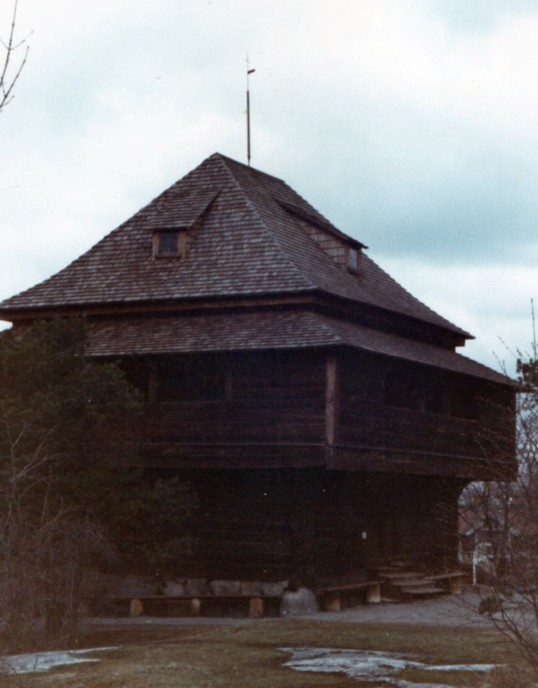
Nineteenth century Swedish storehouse.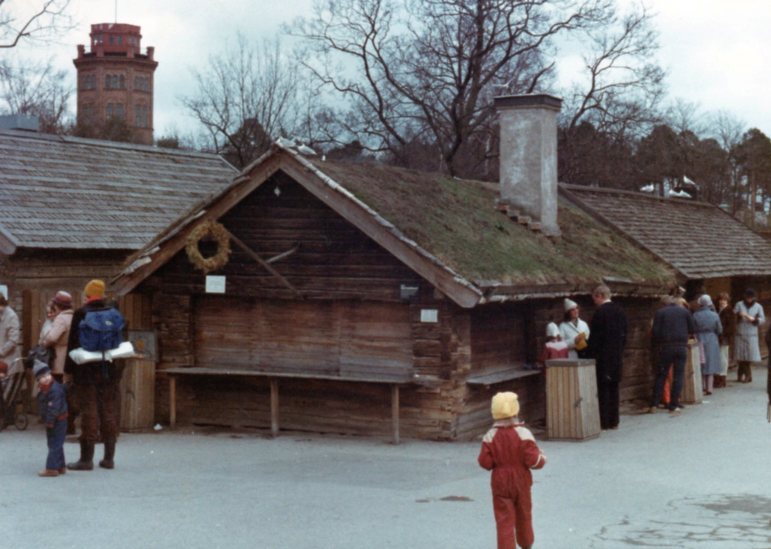
Market stalls.
Nordiska Museet, Stockholm.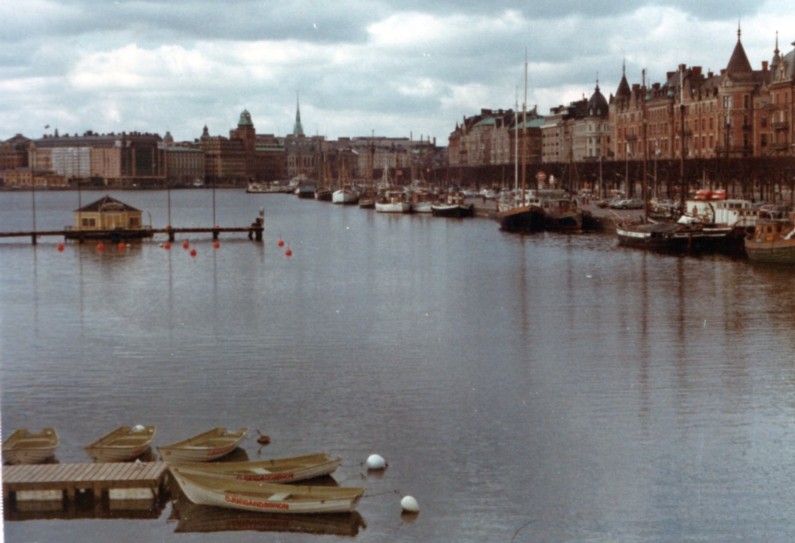
Nybroviken, Stockholm.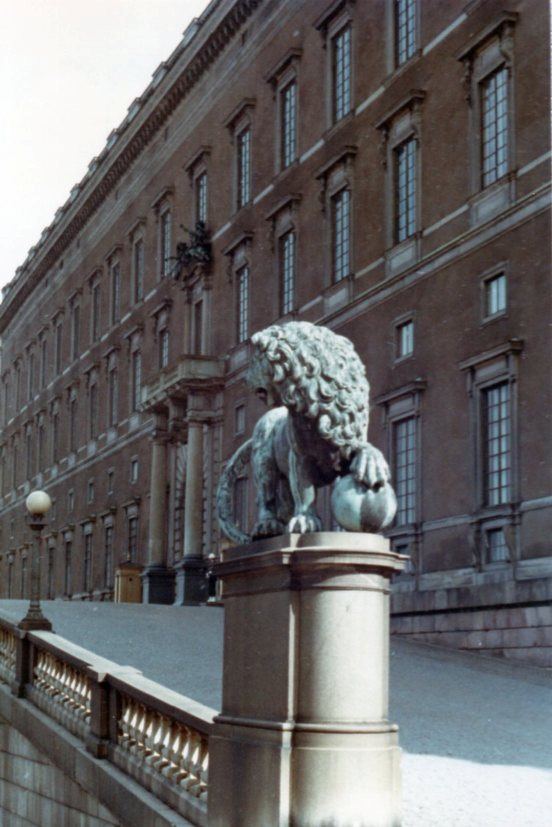
Royal Palace, Stockholm.
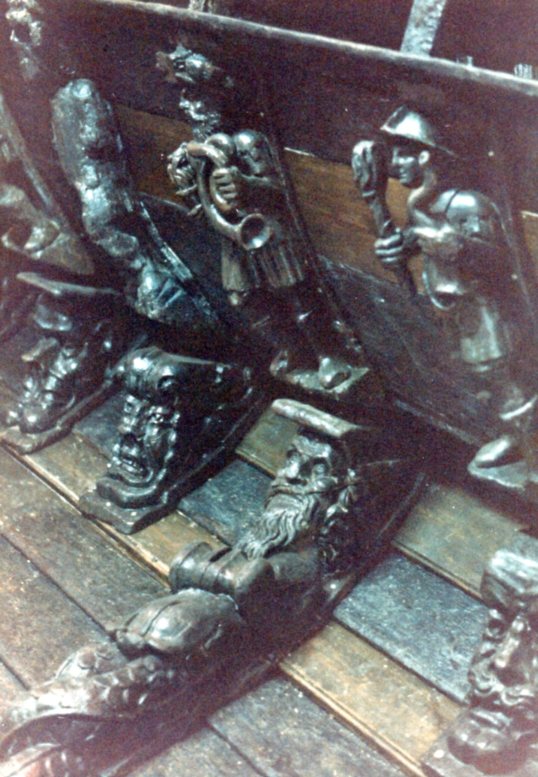
Carvings on the prow of the Wasa, still being restored when we saw it.
.